What is Cinnabar and Why is it so Magical?
The rich reds. The intricate carvings. The exoticism of Chinese culture. Cinnabar has long fascinated me.
Jewellery collectors are often curious when I share a cinnabar piece. “What is this? Is it coral? What’s the stone made out of?”
Cinnabar is actually two things. In its rawest forms, it’s a mineral with a deep red colour. It’s stood the test of time, having graced societies over the ages with a pop of colour for everything from jewellery to ornaments.
Those Roman wall frescos that adorned Pompeii? Laced with cinnabar. Renaissance paintings? Mixed with cinnabar. Even the ancient Mayans used the mineral for burial rites.
The cinnabar style pieces that I am obsessed with hail from China.

Cinnabar Laquerware
The jewellery community has a habit of confusing people. Think Whitby Jet versus French Jet. One is an organic material. The other is black glass from a certain time period. Is it Egyptian made or Egyptian revival?
This confusion also occurs with cinnabar when people contract the term “cinnabar lacquerware” into a single word.
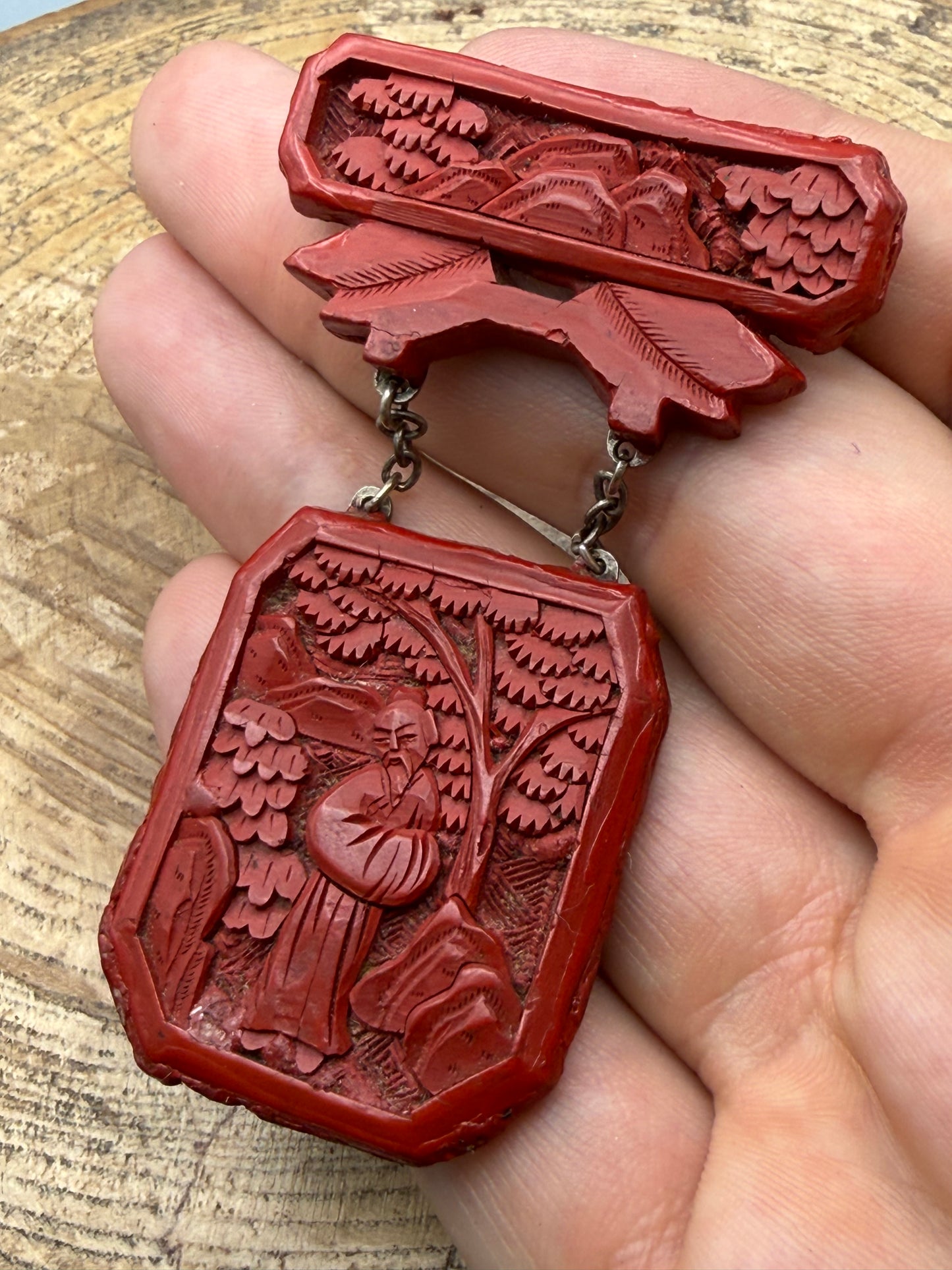
Essentially these cinnabar pieces, much like this stunner below, are carved lacquer that had cinnabar ground into a powder and mixed in to provide its red colour.
And for those of you unsure what lacquer even is, it’s made from the sticky sap of the lacquer tree. I once visited a lacquer craft house in Asia and watched as skilled artisans spent hours intricately carving scenes into bowls.
It’s a fascinating process and an experience I recommend.

Finding a Favourite Cinnabar Brooch
On the topic of this cinnabar, let’s look at this wonderful piece.
This sensational brooch hails from the 1930s and was made for the export market. That means it was made specifically for people in the West who admired the rich symbolism.
It’s two separate parts, connected with ornate chains, and mounted onto silver. A scholar stands beneath the canopy, backed by mountains and surrounded by rocks.
The dealer I purchased this from explained the meaning within Chinese culture but in my haste to purchase the brooch, the history now escapes me. If you do know more about this before I research it further, let me know here.

Cinnabar pieces of such intricacy are increasingly difficult to source. Many have damage. Others have rudimentary carvings. There are a lot of later reproductions.
You’ll always find me at the front of a queue for cinnabar and if you are interested in purchasing this treasure, head on over to here.
I hope this mini guide was helpful and I’m always excited to see other cinnabar pieces so drop me a message if you want to chat.