Collection: Vintage Marcasite Jewellery

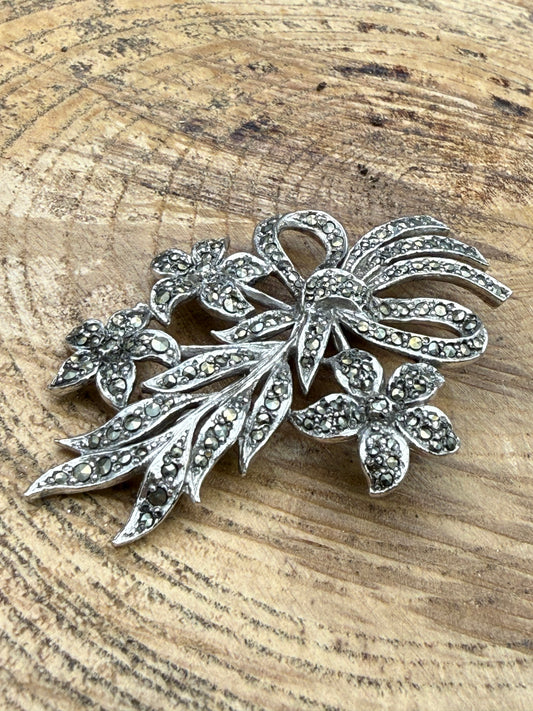
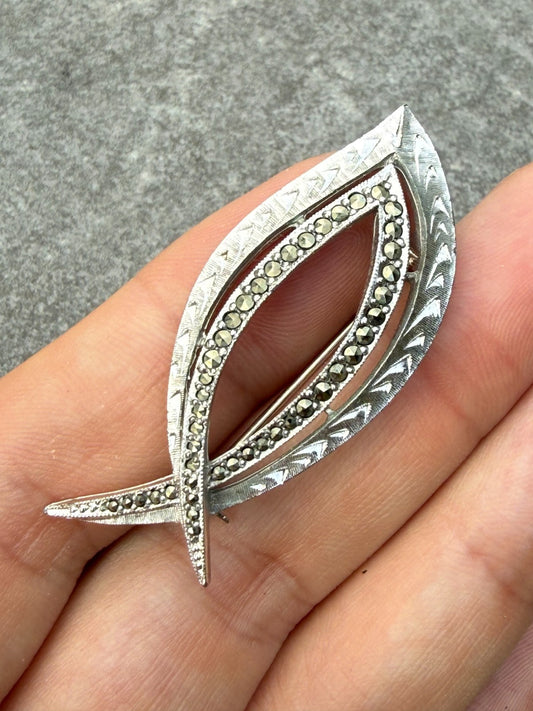
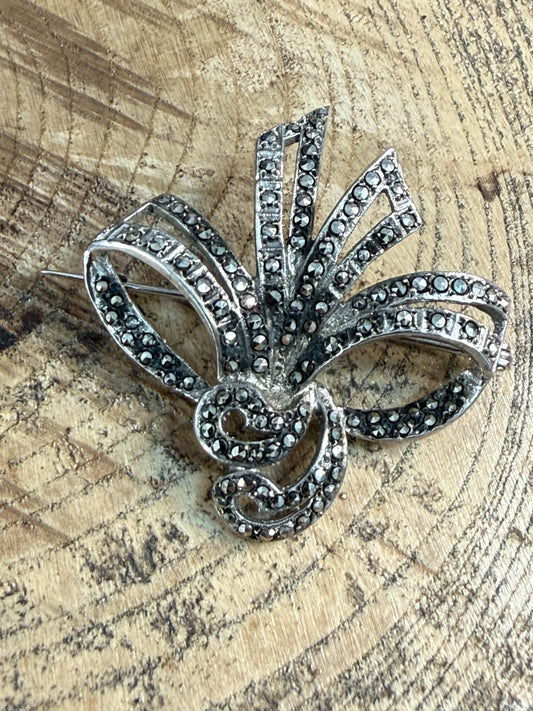
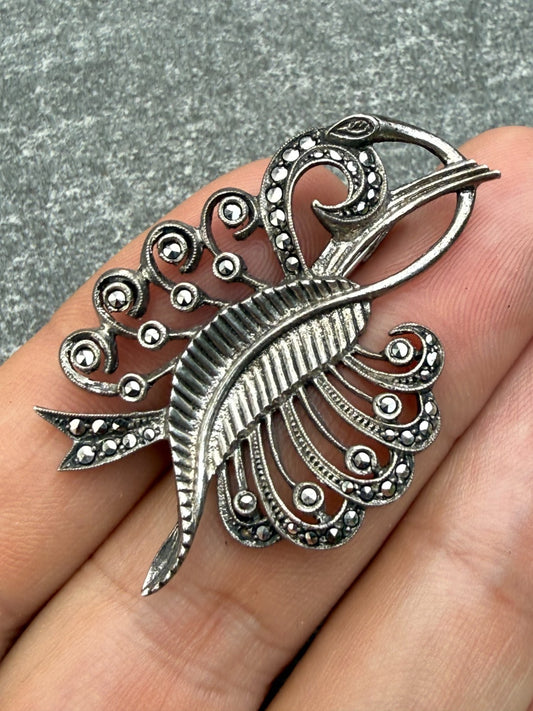
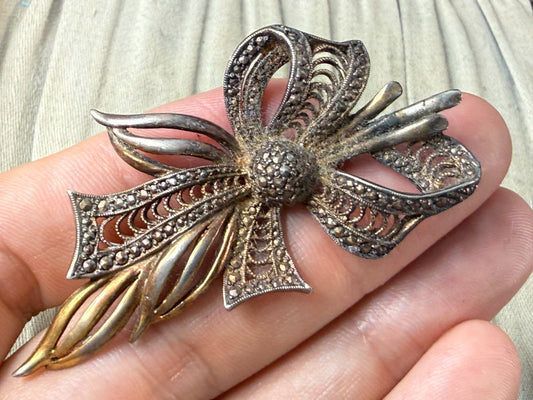
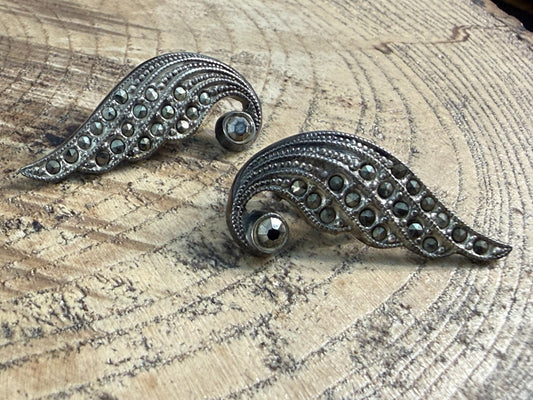
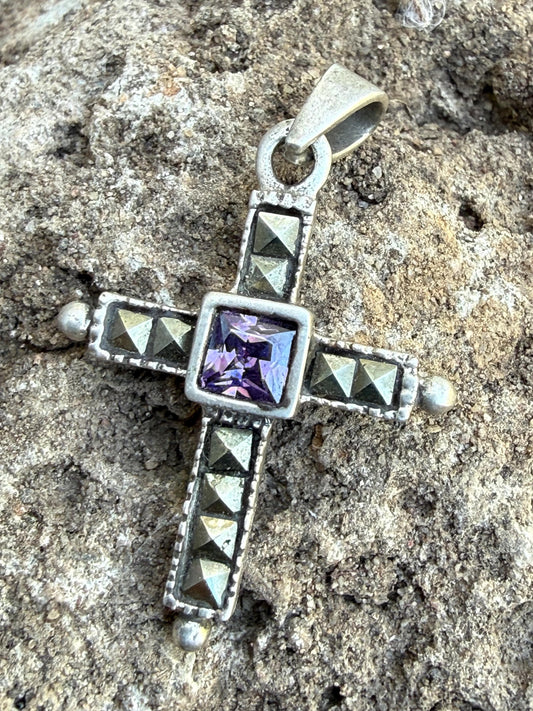
Marcasite has a soft, glittering sparkle that suits everything from bows to wildflowers. Here's all my vintage marcasite in one place: brooches, earrings, a pendant and a ring.

What is marcasite?

Despite the name, the little stones in marcasite jewellery are cut and polished pyrite, better known as fool's gold. The name stuck because it's older than the scientific meaning of the word. Better pieces have small faceted stones set into silver.

It has a long history. Marcasite jewellery goes back to the ancient Greeks, and when diamonds were banned from public display in Switzerland in the 18th century, marcasite and cut steel were used in their place. It was popular through to the mid 1800s, came back around 1849 in mourning jewellery, and was revived again in the Edwardian and Art Deco years.

What to look for

  • Stones set into silver rather than glued, often a sign of a better piece
  • Small faceted stones packed closely together for an all-over sparkle
  • A maker's name on the back: KIGU and Sphinx both turn up here

Marcasite had a revival in the Art Deco years, so have a look at my Art Deco jewellery too. If you'd like a hand finding something, just drop me a message, or browse my full collection.

Questions people ask

Is marcasite jewellery really marcasite?

No. The stones are actually pyrite, also called fool's gold. True marcasite is too brittle to use as a gem, but the name “marcasite jewellery” is older than the scientific meaning of the word and has stuck.

Why was marcasite used instead of diamonds?

It was one of the most common stand-ins for diamonds in the 18th century. When diamonds were banned from public display in Switzerland, marcasite and cut steel were used instead.

Are the stones set or glued?

It depends on the piece. Better marcasite jewellery has the stones set into silver, while cheaper costume pieces, especially from the 20th century, often have them glued in place with fewer facets.