Vintage Cameo Jewellery
Carved portraits and classical scenes in shell, resin and glass
Goddesses, portraits and the odd cherub: here are all my vintage and antique cameos in one place, from Victorian shell brooches to mid-century earrings.
-
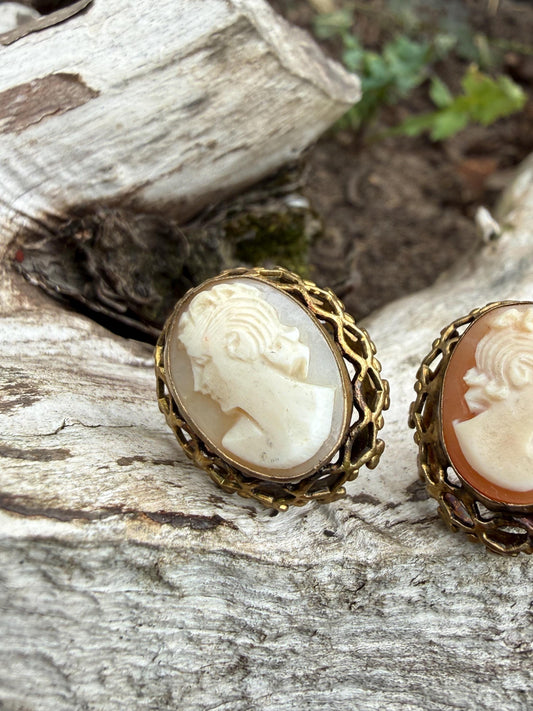
Vintage Carved Shell Cameo Screwback Earrings
Vendor:UnbrandedRegular price £22.50 GBPRegular priceSale price £22.50 GBP -
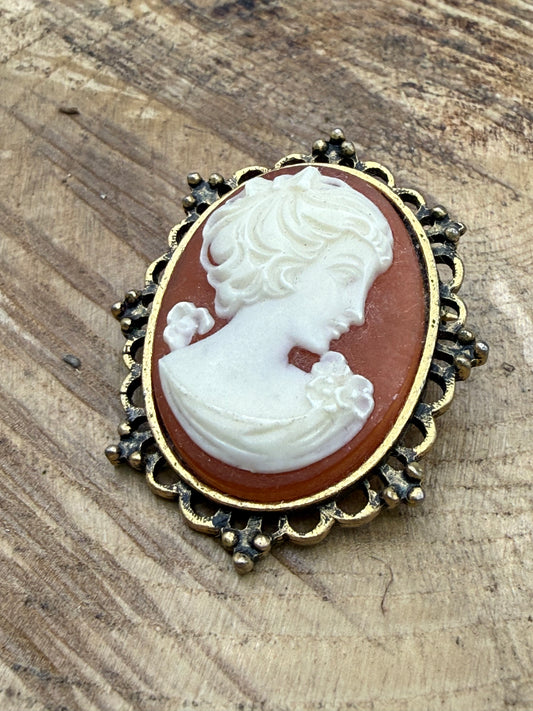
Vintage Cameo Brooch with Beaded Openwork Frame
Vendor:UnbrandedRegular price £15.00 GBPRegular priceSale price £15.00 GBP -
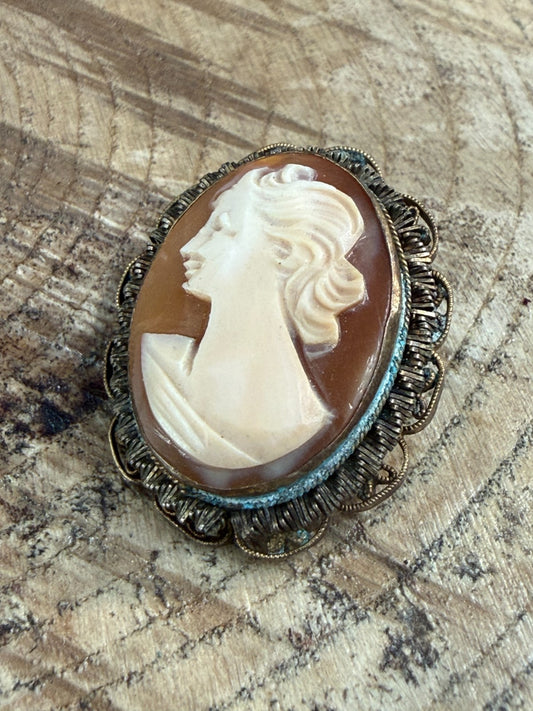
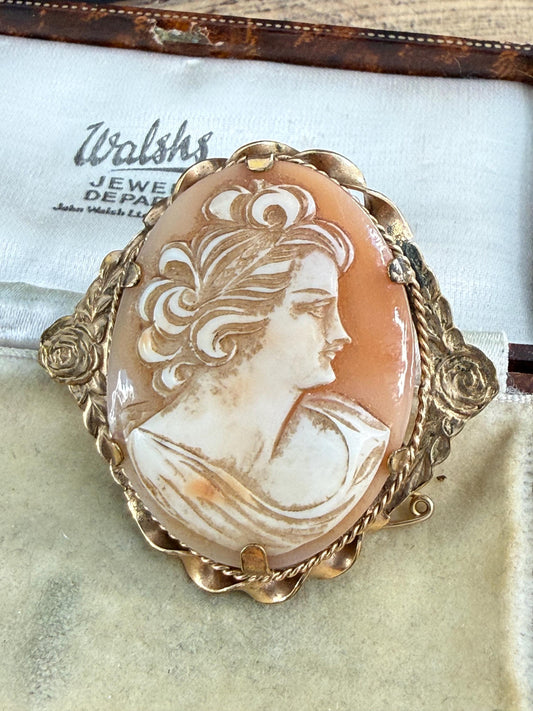
Vintage Carved Shell Cameo Brooch
Vendor:UnbrandedRegular price £30.00 GBPRegular priceSale price £30.00 GBP -
Vintage Italian Dainty Portrait Cameo Brooch
Vendor:UnbrandedRegular price £22.50 GBPRegular priceSale price £22.50 GBP -
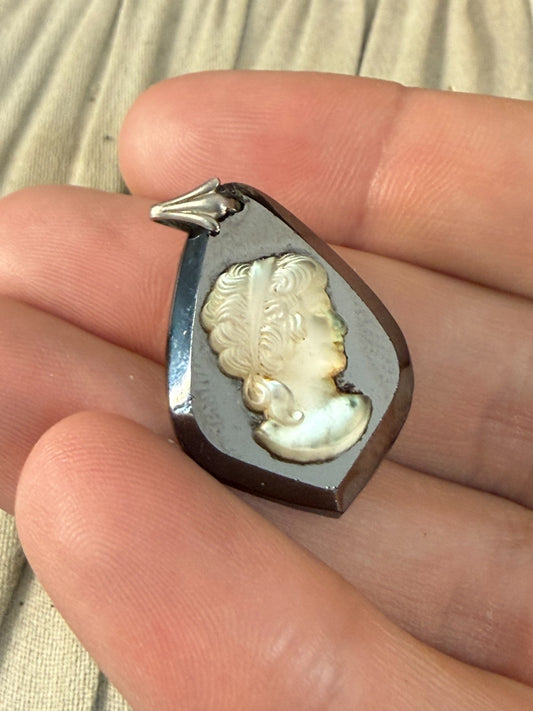
Vintage Hematite Glass Cameo Pendant
Vendor:UnbrandedRegular price £15.00 GBPRegular priceSale price £15.00 GBP -
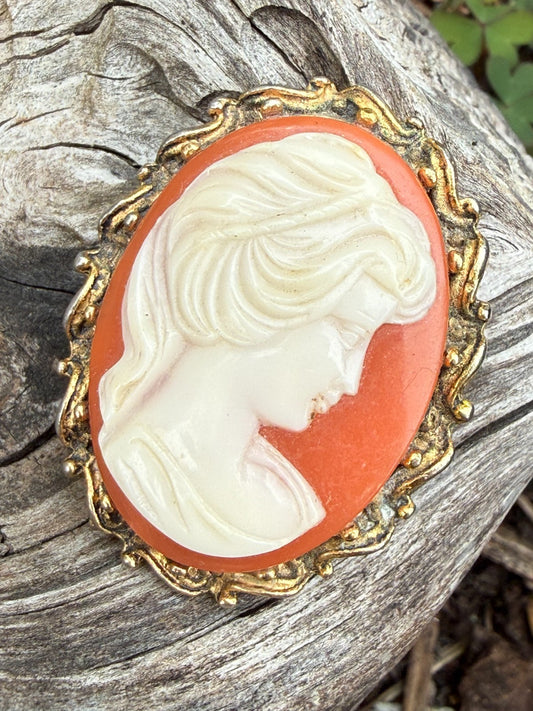
Vintage Cameo Brooch in Resin
Vendor:UnbrandedRegular price £15.00 GBPRegular priceSale price £15.00 GBP -
Antique 12ct Rolled Gold Shell Cameo Brooch
Vendor:ClewcoRegular price £50.00 GBPRegular priceSale price £50.00 GBP -
Vintage Cameo Screw Back Shell Earrings
Vendor:Mid CenturyRegular price £30.00 GBPRegular priceSale price £30.00 GBP -
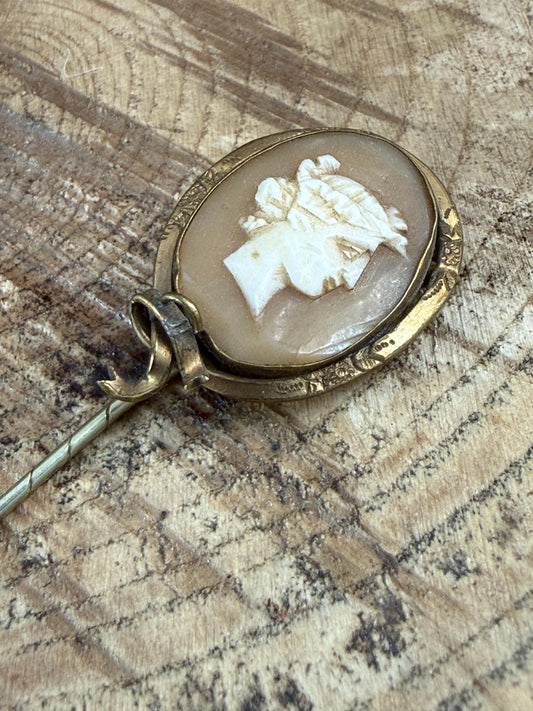
Antique Neoclassical Cameo Shell Stick Pin
Vendor:VictorianRegular price £40.00 GBPRegular priceSale price £40.00 GBP -
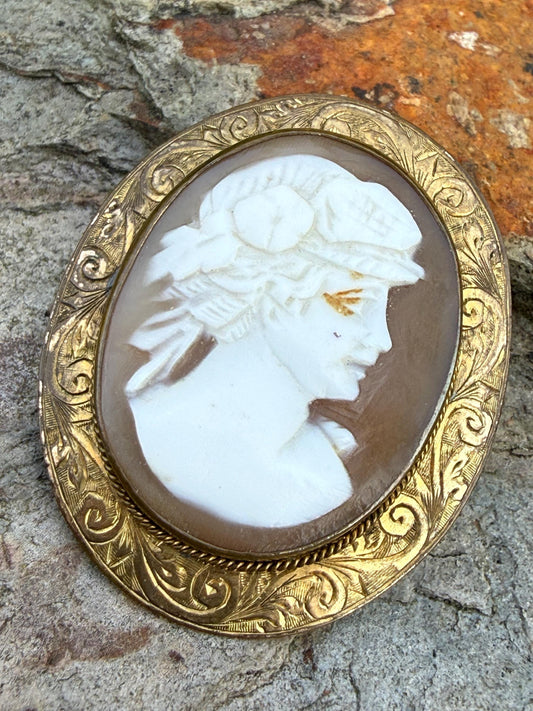
Antique Victorian Cameo Brooch of Greek Goddess Flora
Vendor:VictorianRegular price £50.00 GBPRegular priceSale price £50.00 GBP -
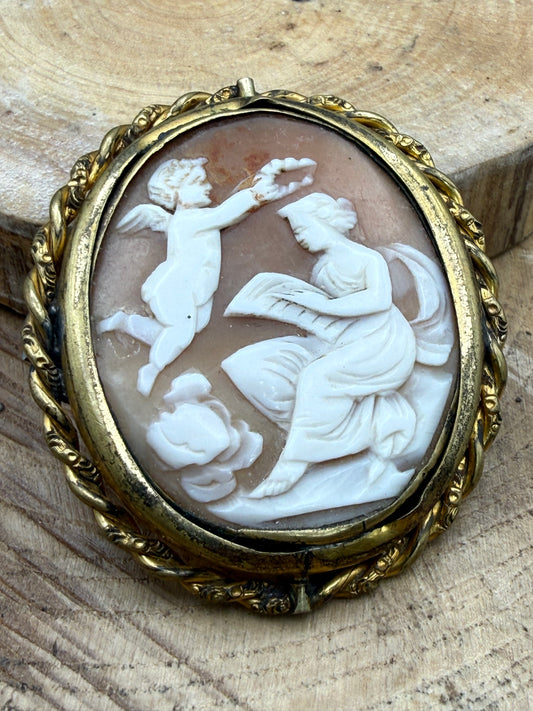
Antique Shell Cameo Brooch of Cupid and Psyche
Vendor:VictorianRegular price £150.00 GBPRegular priceSale price £150.00 GBP
From hardstone to shell
Ancient cameos were carved from semi-precious stones such as onyx and agate. Carving agate was slow work, while shell was much quicker and therefore cheaper, so shell cameos became fashionable in the 19th century. Many were bought by tourists as souvenirs, and by the middle of the century shell carving dominated production in both Italy and France.
A favourite was the bullmouth helmet shell, with a whitish upper layer and a rich orange-brown layer below. The carver cuts the figure from the creamy layer and leaves the darker one as the background.
What to look for
- A gentle curve: hand carved cameos tend to keep the natural curve of the shell, while machine-made ones tend to be flat
- Creamy figures against a peachy or orange-brown ground
- The frame: rope twist, filigree and gilt wire-work all turn up here
Want the full story? Read What Is a Shell Cameo and How Is It Carved? on my blog. If you'd like a hand finding something, just drop me a message, or have a look through my full collection.
Questions people ask
What is a cameo?
A cameo is a carving in relief, so the picture stands up from the surface. The opposite is an intaglio, which is cut into the surface instead. Cameos often make the most of a material's natural layers, carving a pale figure against a darker background.
Why are so many cameos made from shell?
Carving a hardstone like agate was slow, while shell was much quicker and cheaper to work. That made shell cameos affordable, and they became fashionable in the 19th century, with many sold to tourists as souvenirs.
How can I tell if a cameo is hand carved?
Look at the shape. Hand carved cameos tend to keep the natural curve of the shell they were cut from, while cameos carved by machine tend to be flat.
What makes a cameo antique?
I call a cameo antique when it's Victorian or Edwardian, so roughly 100 years old or more. The back is often the best clue: many antique brooches have a simple C clasp with no safety catch, and the oldest have a long pin that pokes out past the edge of the brooch. Each listing says whether I think a piece is antique or vintage.